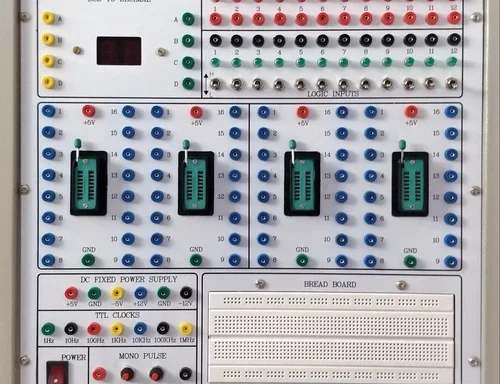

The Soil Testing Equipments is offered to the esteemed customers at highly competitive prices. These products are manufactured using high-grade components that are procured from some of the most trusted vendors of the industry. In addition to this, we make sure that the ordered products are timely delivered at the clients’ premises in perfect packaging.
Description
Introduction to Soil Testing Equipment
Soil Testing Equipment is essential for analyzing the physical and chemical properties of soil used in construction, agriculture, and environmental studies. Engineers, researchers, and laboratory technicians use these instruments to determine soil strength, moisture content, density, and composition.
Accurate soil analysis helps professionals evaluate whether soil is suitable for building structures, road construction, or agricultural use. Moreover, these instruments assist laboratories in maintaining quality standards during testing procedures.
Manufacturers produce these equipment units using high-quality components sourced from reliable vendors. As a result, laboratories receive durable and reliable instruments suitable for repeated testing. In addition, proper packaging ensures that the equipment reaches customers safely and in excellent condition.
Working Principle of Soil Testing Equipment
These instruments operate using different scientific methods depending on the type of soil test being performed. For example, some equipment measure soil moisture content through heating and evaporation methods.
Other testing devices determine soil density, compaction, or shear strength by applying controlled pressure or load. Consequently, engineers can evaluate how soil behaves under structural stress.
Chemical soil tests analyze nutrient levels, acidity, and mineral composition. As a result, researchers can understand soil fertility and environmental conditions.
These combined testing methods provide a complete understanding of soil characteristics for engineering and agricultural applications.
Applications of Soil Testing Equipment
Civil engineering laboratories widely use these instruments to evaluate soil properties before construction projects begin. Engineers rely on soil testing results to design stable foundations for buildings, roads, and bridges.
Agricultural laboratories also use soil testing equipment to analyze soil fertility and nutrient content. Farmers and researchers can determine the suitability of soil for crop production.
Environmental laboratories apply soil testing methods to monitor soil contamination and ecosystem health. Consequently, these instruments support both environmental protection and infrastructure development.
Features
This laboratory equipment includes several features that support reliable soil testing and analysis.
Firstly, high-grade components ensure durability and long service life. Secondly, the equipment provides accurate measurements required for engineering and research work.
Key features include:
- High-quality components from trusted vendors
- Reliable performance for laboratory testing
- Suitable for civil engineering and agricultural analysis
- Durable construction for repeated use
- Safe packaging and timely delivery to laboratories
These features make the equipment dependable for professional soil analysis.
Educational Importance
Soil testing is an important part of civil engineering and environmental science education. Therefore, laboratories use these instruments to help students understand soil properties and testing techniques.
Students learn how to evaluate soil strength, moisture levels, and composition. Moreover, practical testing improves their understanding of foundation engineering and environmental science.
Consequently, these experiments prepare students for real-world engineering and agricultural applications. Many institutions integrate such equipment with other scientific instruments available here:
https://www.aseducationalkits.com/products-category/physics-lab-equipment/
Industrial Uses
Soil testing plays a crucial role in infrastructure development and environmental management. Construction companies rely on soil testing results to ensure safe building foundations.
Agricultural industries also use soil testing to improve crop production and soil management practices. Additionally, environmental agencies analyze soil samples to monitor contamination and land quality.
Further laboratory instruments and engineering testing equipment catalogues can also be explored here:
https://interlabs.in/products-catalogue/
Conclusion
Soil Testing Equipment is essential for analyzing soil properties used in construction, agriculture, and environmental studies. Its accurate measurement capabilities help professionals evaluate soil conditions and ensure safe infrastructure development.
Therefore, it remains an important tool for civil engineering laboratories, agricultural research centers, and environmental monitoring facilities.