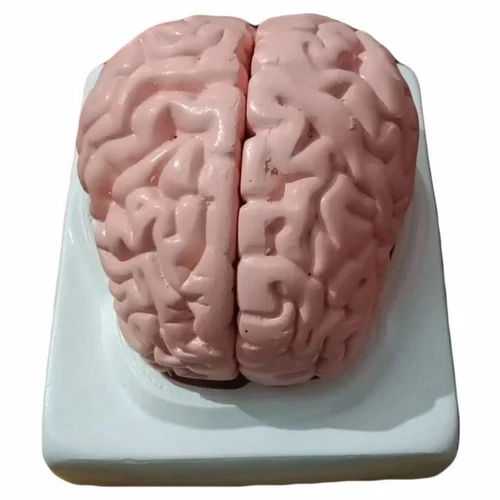
human brain model to enable disease research, drug discovery. Cultured from induced pluripotent stem cells, “miBrains” integrate all major brain cell types and model brain structures, cellular interactions, activity, and pathological features
Description
The Human Brain Model is an advanced scientific and educational resource designed to support learning, research, and experimental studies related to brain structure and function. It provides a detailed representation of the human brain, allowing users to explore complex neurological concepts in a controlled and ethical manner. As a result, students, educators, and researchers can study brain organization and activity without relying on invasive or clinical testing.
Universities, neuroscience laboratories, and research institutes across India widely use human brain models for advanced biology and medical education. In addition, academic and research centers in countries such as the United States, the United Kingdom, South Africa, and Kenya rely on brain models to support structured learning and experimental simulation.
Human Brain Model for Structure and Cellular Interaction Study
The Human Brain Model enables detailed exploration of brain regions, cellular organization, and internal connectivity. Modern research-oriented models, including those developed from induced pluripotent stem cells, replicate major brain cell types and structural organization. Therefore, learners can study neurons, glial cells, and their interactions in a realistic and observable format.
These models help demonstrate how different brain regions communicate and coordinate activity. Moreover, they support understanding of neural signaling, synaptic behavior, and basic functional pathways that govern cognition and motor control.
Human Brain Model for Disease Research and Drug Discovery Education
The Human Brain Model also plays a significant role in disease modeling and drug discovery education. Researchers and students use it to study pathological features associated with neurological disorders. Consequently, learners can observe how disease conditions may alter cellular behavior and brain activity in a simulated environment.
Because these models allow controlled experimentation, they support early-stage research training without direct human or animal testing. As a result, institutions can promote ethical research practices while introducing learners to modern neuroscience methodologies.
Advanced Design and Safe Research Use
The model integrates multiple brain cell types and simulates realistic brain-like behavior under laboratory conditions. Additionally, its design supports repeated observation and experimentation without degradation. This durability ensures long-term educational and research value.
Suitable for Education and Research Modeling Use
This human brain model is suitable for universities, neuroscience laboratories, medical colleges, biotechnology training centers, and advanced biology education programs. It supports conceptual learning, experimental design training, and research methodology education.
Applications
- Studying human brain structure and regions
- Learning neural cell interaction and signaling
- Disease modeling and pathology education
- Drug discovery and research training
- Advanced neuroscience and biotechnology education
other educational working models and laboratory kits to enhance hands-on learning in engineering and technical laboratories. In addition, institutions may also explore complementary learning solutions such as Jaadui Pitara educational learning kits to support interactive and concept-based education.