Electric generators convert mechanical energy into electricity for backup, remote power, and primary sources, used in homes (outages), hospitals (life support), industries (factories, mining), agriculture (pumps), data centers, events, and transportation (vehicles), with models ranging from portable units for camping to massive power plant turbines, highlighting their versatile role in providing power where grid access is limited or unreliable.
Description
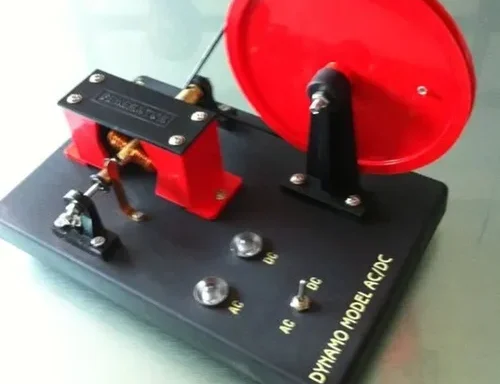
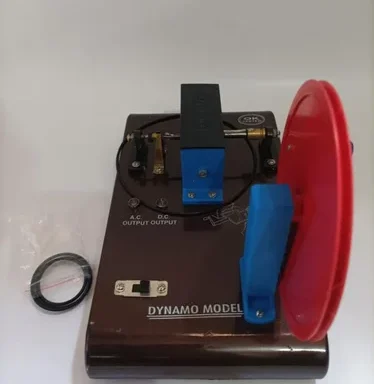
The Electric Generators Model is a teaching and demonstration tool designed to explain how mechanical energy converts into electrical energy. It helps students, trainees, and educators understand the basic working principles of generators that supply power in everyday life. As a result, learners can clearly connect theoretical concepts of electricity with practical power generation systems.
Schools, engineering institutes, and training centers across India commonly use electric generators models for physics and basic engineering education. In addition, educational institutions in countries such as the United Kingdom, South Africa, and Kenya rely on these models to explain power generation where grid access remains limited or unreliable.
Electric Generators Model for Understanding Power Generation
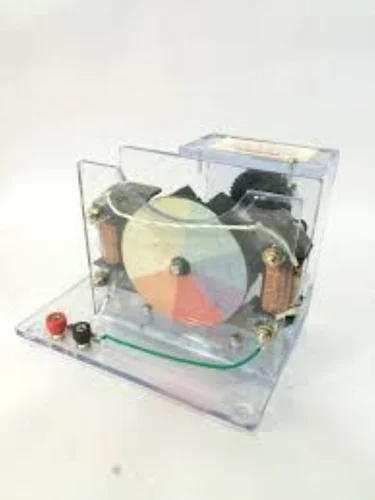
The Electric Generators Model demonstrates how rotational mechanical input produces electricity through electromagnetic induction. Teachers use the model to explain essential components such as the rotor, stator, magnetic field, and output terminals. Therefore, students gain a clear understanding of how generators work at a fundamental level.
Because the model presents internal parts in a visible and simplified form, learners can easily observe energy conversion in action. Moreover, hands-on operation improves conceptual clarity and strengthens retention during examinations.
Electric Generators Model for Real-World Applications Study
The Electric Generators Model also helps explain how generators support critical services in real life. Educators use it to discuss backup power during outages in homes, uninterrupted power supply in hospitals, and continuous operation in industries such as factories, mining, and agriculture. Consequently, students understand why generators play a vital role in modern infrastructure.
The model further supports discussion on portable generators used for camping and events, as well as large-scale generator systems used in power plants and data centers. As a result, learners can compare generator sizes, capacities, and applications across different sectors.
Simple Construction and Classroom-Friendly Design
The model features a stable base and clearly marked components for easy demonstration. Additionally, its durable construction supports repeated classroom use without complex maintenance. The compact size allows convenient use during lectures, lab sessions, and exhibitions.
Suitable for Education and Technical Demonstration
This electric generators model is suitable for school physics laboratories, engineering colleges, vocational training centers, science exhibitions, and technical education programs. It supports foundational learning in electricity, energy conversion, and power systems.
Applications
- Demonstrating mechanical to electrical energy conversion
- Teaching generator working principles
- Understanding backup and remote power systems
- Physics and engineering classroom demonstrations
- Practical learning in electricity and energy topics
For institutions and laboratories planning to expand their scientific infrastructure, a wide range of biology laboratory instruments and teaching aids is available at
https://www.aseducationalkits.com/products-category/biology-lab-equipments/
In addition, educators and procurement teams can explore a broader selection of educational science items and classroom resources at
https://www.labscientificequipments.com/product-category/educational-items/