
Zoology models are essential educational tools designed to help students, teachers, and researchers understand the structure, function, and behaviour of various animal species with exceptional clarity and accuracy. These models provide a highly detailed and visually engaging representation of anatomical features that are often difficult to study in real life due to size, accessibility, or ethical limitations. Crafted with precision and scientific accuracy, zoology models serve as an invaluable resource in schools, colleges, universities, veterinary institutions, museums, and biological training centres.
Description
They are especially useful for practical demonstrations, examinations, and hands-on learning environments where visual and tactile understanding is crucial to grasp complex biological concepts. Each model is designed to replicate animal anatomy in a way that enhances comprehension of skeletal frameworks, organ systems, physiological structures, and evolutionary adaptations. Whether illustrating the morphology of insects, amphibians, reptiles, birds, or mammals, zoology models allow learners to explore the natural world with enhanced depth and detail. They support interactive teaching by providing a three-dimensional perspective that textbooks and diagrams alone cannot offer, ensuring a stronger connection between theoretical knowledge and practical observation.
These educational models are constructed from durable, high-quality materials that ensure long-lasting use in classrooms and laboratories, even with frequent handling by students. They often emphasise key biological features such as circulatory pathways, digestive organs, reproductive systems, musculature, and external body characteristics to make learning more intuitive and engaging. Many zoology models come with detachable parts or sectional views that reveal internal components, making them ideal for advanced study and demonstrations involving dissection alternatives. By providing a clear visual of internal structures without the need for actual specimens, these models promote ethical learning practices while still offering the depth required for scientific training. The vivid colours, realistic textures, and accurate proportions help students easily identify each component, reinforcing memory retention and conceptual understanding.
Zoology models play a significant role in supporting curriculum-based education, competitive exam preparation, and research-oriented learning. They are invaluable for understanding animal diversity, classification, physiology, ecological adaptations, and comparative anatomy. By using these models, educators can explain topics such as evolution, habitat specialisation, behaviour patterns, and species interaction more effectively. In higher-level studies, zoology models also facilitate detailed insights into organ development, neurological structures, and anatomical variations across species, helping learners build strong foundational knowledge for careers in biology, zoology, veterinary science, and environmental studies. These models also serve as striking display pieces in museums and science exhibitions, where they help spark curiosity and encourage young learners to explore the wonders of the animal kingdom.
Easy to maintain, lightweight, and designed for repeated instructional use, zoology models are a must-have resource for any educational environment aiming to enhance practical learning and strengthen students’ connection to life sciences. Their ability to transform complex zoological concepts into clear, tangible visuals makes them a highly effective teaching aid for modern biology education.
See also different:

Audio Frequency Function Generator

Auxiliary Items G clamp 3 Inch
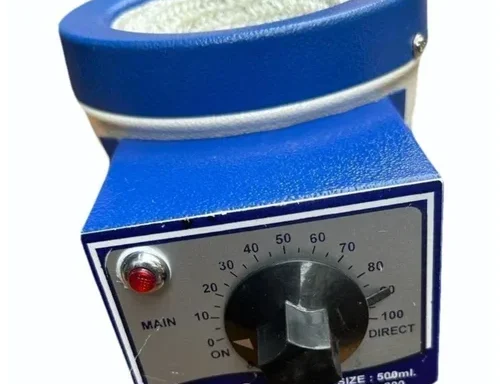
Laboratory Heating Mantle

Laboratory Bod Incubator