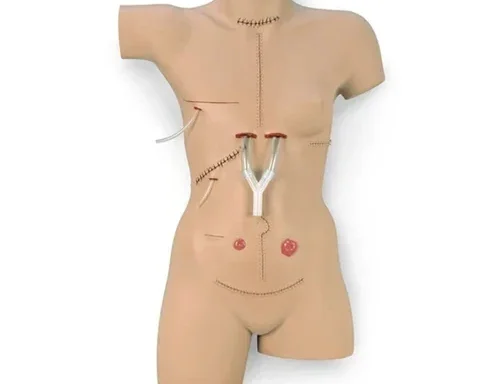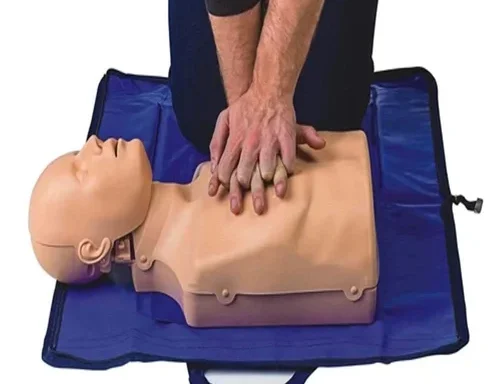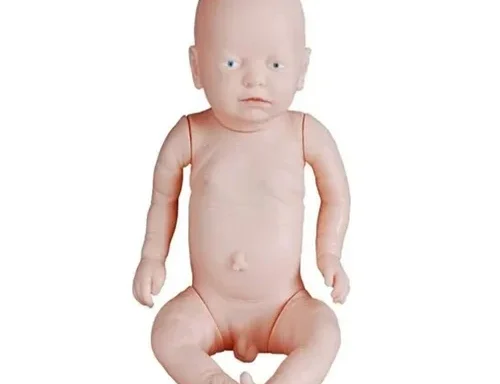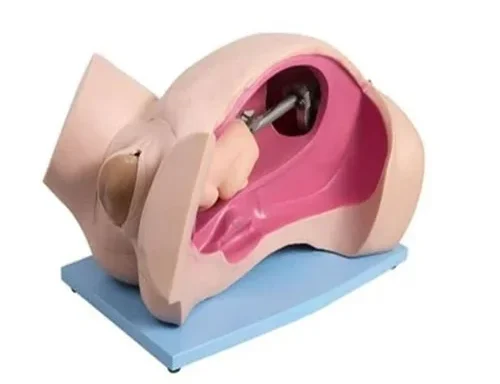
Surgical sutures, commonly known as stitches, are essential medical devices used to hold body tissues together after an injury or surgery to facilitate the natural healing process. Primary Uses of Surgical SuturesThe primary function of a suture is to provide support to the wound edges until the tissue is strong enough to hold itself closed. Specific uses vary based on the type of material, size, and location:
Description
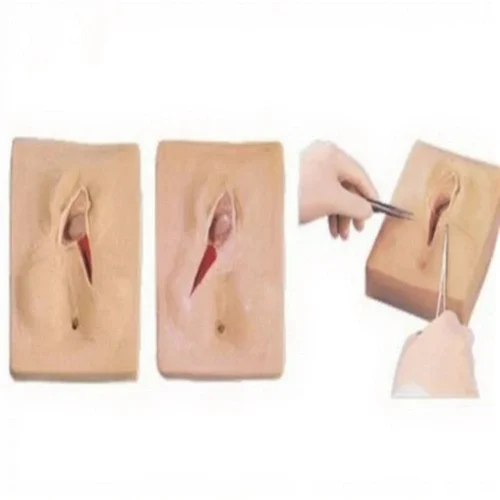
A surgical suture model is a practical training tool designed to teach wound closure and tissue approximation techniques in a controlled environment. It allows medical students, nurses, and surgical trainees to practice precise alignment of incision or laceration edges before clinical application. Because correct suturing technique directly impacts healing outcomes, this model supports skill development in a safe and repeatable manner. Moreover, it helps learners build confidence through hands-on experience without patient risk.
Surgical Suture Model for Wound Closure and Ligation Training
The surgical suture model enables practice of wound closure procedures, which involve accurate approximation of tissue layers. It also supports ligation training, where learners simulate tying off blood vessels to control bleeding. Therefore, students understand how proper knot placement and tension contribute to surgical safety. In addition, the model allows practice in securing medical devices such as surgical mesh, vascular grafts, or drains, which reinforces real-world procedural understanding.
Anastomosis and Specialized Tissue Repair Practice
A surgical suture model helps demonstrate anastomosis techniques used to connect anatomical structures such as blood vessels or sections of the bowel. Trainees can practice alignment, spacing, and knot security to simulate cardiovascular or gastrointestinal procedures. Furthermore, different model configurations allow simulation of repairing tendons, ligaments, nerves, and delicate tissues. Because various tissue types require specific suturing methods, the model supports exposure to diverse clinical scenarios.
Training for Minimally Invasive and Advanced Techniques
The surgical suture model also prepares learners for minimally invasive techniques where space and access are limited. By practicing needle handling and precision movement, students develop coordination required for laparoscopic and endoscopic procedures. Consequently, they gain familiarity with specialized suture types and needle designs used in modern surgical environments.
For related laboratory and medical training equipment, you may explore:
https://www.aseducationalkits.com/products-category/physics-lab-equipment/
For a broader range of laboratory and healthcare training products, professionals can also refer to:
https://interlabs.in/products-catalogue/
Applications
Wound closure and tissue approximation training
Ligation and bleeding control practice
Anastomosis technique simulation
Repair of specialized tissue types
Minimally invasive surgical skill development