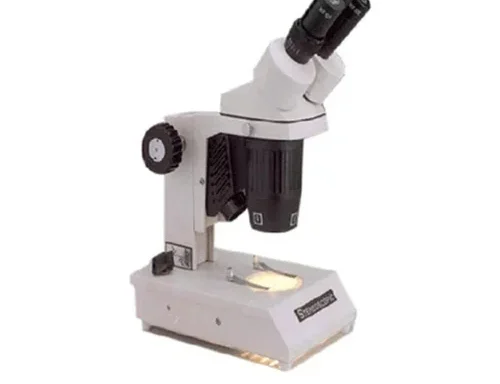
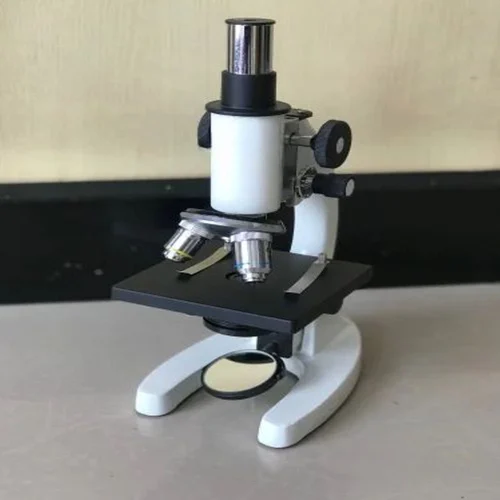
Student compound microscopes are used in schools and labs to magnify tiny specimens like cells, bacteria, pond organisms (protists, algae), and thin tissue slices, helping students visualize fundamental biology concepts (cell division, plant anatomy) and learn lab skills for exploring life’s building blocks, disease agents, and basic structures. They allow viewing transparent or thin samples with high magnification, making them essential for hands-on learning in high school and university biology/chemistry.
Description
A Student Compound Microscope is a fundamental laboratory instrument used in schools and colleges to observe microscopic specimens with clarity. It provides high magnification to study cells, bacteria, algae, protists, and thin tissue sections. Therefore, students can directly visualize core biological structures that form the foundation of life sciences.
Key Features of the Educational Microscope
- High magnification objective lenses for detailed viewing
- Stable monocular or binocular head for comfortable observation
- Built-in illumination system for clear specimen visibility
- Fine and coarse focusing controls for precise adjustments
- Durable frame designed for regular classroom use
Applications of Student Compound Microscope in Laboratories
The Student Compound Microscope enables learners to explore cell division, plant anatomy, and microbial structures in biology laboratories. In addition, it supports chemistry practicals that involve crystalline structures and thin transparent samples. Because the microscope provides sharp magnification, students gain a deeper understanding of microscopic organisms and tissue structures.
Furthermore, it helps learners develop essential laboratory skills such as slide preparation, focusing techniques, and sample handling. As a result, it strengthens practical knowledge and scientific confidence at both high school and university levels.
Importance in Science Education
The Student Compound Microscope plays a vital role in hands-on science education. It bridges the gap between textbook theory and real-time observation. Consequently, students build a strong conceptual foundation in microbiology, botany, and cellular biology.
For related laboratory and educational equipment, you may explore:
https://www.aseducationalkits.com/products-category/physics-lab-equipment/
For a broader range of laboratory and analytical solutions, professionals can also refer to:
https://interlabs.in/products-catalogue/