
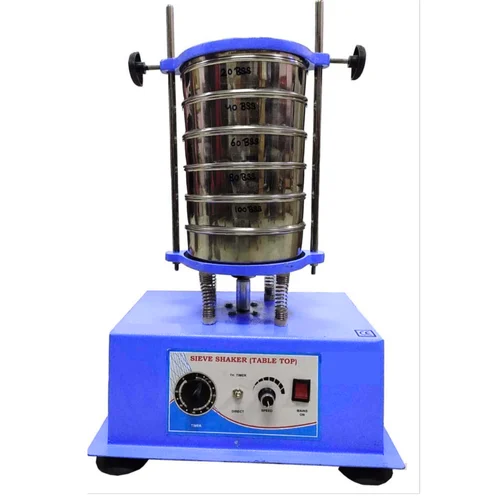
A sieve shaker is a fundamental piece of laboratory and educational equipment used for determining particle size distribution with accuracy and consistency. It works on the principle of vibration, agitation, or gyration, allowing fine and coarse materials to be efficiently separated based on particle size. The process of sieving relies on how particles interact with the mesh surface, and various factors such as particle shape, size, friability, cohesion, sieve load, shaking method, and the ratio of sieve open area to total area influence the outcome. During operation, the sample undergoes controlled horizontal or vertical movement depending on the design of the shaker, ensuring that particles repeatedly come into contact with the mesh openings. The more often particles interact with the mesh, the higher the chance they have of passing through, making time and motion critical factors in achieving precise results.
Description
Structurally, a sieve shaker consists of a sturdy base, a cradle to hold the sieves, and an electrical power unit that provides the required energy for agitation. The cradle is typically constructed from two vertical rods joined by a platform at the bottom, with a horizontal support that pivots freely around the upper ends, mounted on shock absorbers to minimize vibration transfer. The sieves are held securely in place with retainer rings, sieve holders, and nuts on the vertical rods, ensuring that the stack remains tight during the shaking process. Standard test sieves with varying mesh sizes are used, and they are arranged in a nest with the coarsest sieve on top, followed by progressively finer sieves. The test sample is placed on the top sieve, and the entire set is agitated for a fixed duration, usually around 20 minutes, after which each sieve is carefully weighed to determine the size distribution of the particles.
Sieve shakers are highly versatile and can be used to analyze a wide variety of materials across educational, industrial, and research laboratories. They are particularly effective for materials up to 150 microns in size and are commonly used for powders, granules, soils, aggregates, and other particulate matter. For wet sieve analysis, the machine ensures that the particles are only dispersed by the liquid and do not come into direct contact with it, allowing for accurate results even in moisture-sensitive materials. This feature makes sieve shakers especially valuable in disciplines such as materials science, civil engineering, geology, and pharmaceutical studies where understanding particle behavior is crucial.
One of the key advantages of a sieve shaker is its simplicity and ease of operation. The process is quick, taking only a short period to achieve separation, and it provides results that are both accurate and reproducible. The compact design allows it to be installed without requiring excessive space, making it ideal for classrooms, laboratories, and field research setups. Additionally, the sieve shaker is more cost-effective compared to other advanced particle analysis methods, while still delivering highly reliable outcomes.
In conclusion, the sieve shaker is an indispensable educational and laboratory tool that combines efficiency, precision, and affordability. By offering controlled vibration and consistent motion, it ensures dependable particle size analysis for a wide range of materials. Its durable construction, ease of use, and accuracy make it an essential piece of equipment for students, educators, and researchers working in scientific and technical fields where particle characterization is a key aspect of study and experimentation.
See also different:
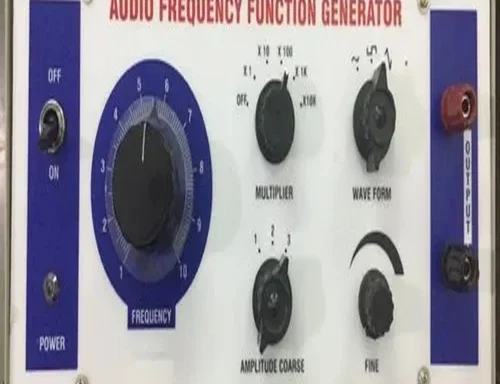
Audio Frequency Function Generator
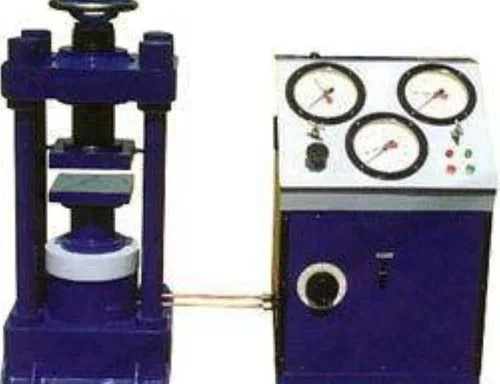
Compression Testing Machine

Auxiliary Items Slides Standard plain glass slide. (Packet of 24 slides)

Fully Autoclavable Micropipette