
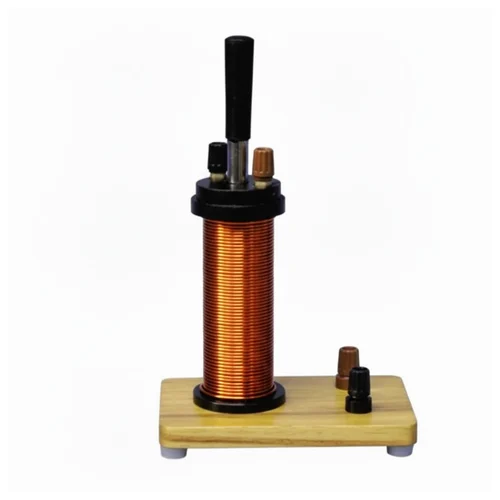
An induction coil demonstration model is a valuable educational tool designed to help students and trainees understand the fundamental principles of electromagnetic induction, voltage transformation, and high-voltage generation in a safe, controlled environment. This equipment is widely used in physics laboratories, engineering training centers, and technical institutes where practical learning is essential for building strong conceptual foundations. The demonstration model provides a clear visual and functional representation of how coils, magnetic fields, and electrical currents interact, making it easier for learners to observe theoretical concepts in real time. Built with durable materials, the model is engineered for long-term use and frequent classroom handling, ensuring reliability and consistent performance during demonstrations and experiments.
Description
The Induction Coil Demonstration Model is a classic physics teaching apparatus designed to clearly illustrate the principles of electromagnetic induction. It demonstrates how an alternating or rapidly interrupted direct current in a primary coil induces a high voltage in a secondary coil. As a result, students can visually understand energy transfer between coils without direct electrical contact.
Schools, colleges, and physics laboratories across India widely use induction coil demonstration models for teaching electromagnetism. In addition, educational institutions in countries such as the United Kingdom, South Africa, and Kenya rely on this model to strengthen conceptual learning in electricity and magnetism.
Induction Coil Demonstration Model for Electromagnetic Induction Learning
The Induction Coil Demonstration Model helps explain Faraday’s law of electromagnetic induction in a practical and observable manner. Teachers use the model to show how changes in current in the primary winding create a changing magnetic field. Therefore, students can clearly see how this changing field induces a voltage in the secondary winding.
Because the model highlights the relationship between the number of coil turns and voltage output, learners can directly connect theory with experimental observation. Moreover, the visible coil arrangement improves engagement and understanding during classroom demonstrations.
Induction Coil Demonstration Model for Mutual Inductance and Applications
The Induction Coil Demonstration Model also supports the study of mutual inductance and switching behavior. The built-in current interruption mechanism allows rapid changes in magnetic fields, which are essential for inducing high voltage. Consequently, students gain firsthand knowledge of the role of switching and oscillation in electrical systems.
Educators often link these demonstrations to real-world applications such as transformers, ignition coils, wireless power transfer, and high-voltage generation. As a result, learners understand how basic physics principles form the foundation of modern electrical devices.
Safe, Stable, and Classroom-Friendly Design
The model features insulated components, protective housings, and a stable base to ensure safe operation during demonstrations. Additionally, the compact structure allows easy placement on laboratory benches while supporting repeated use. The simple setup makes it suitable for routine classroom experiments without complex preparation.
Suitable for Education and Demonstration Use
This induction coil demonstration model is suitable for school physics laboratories, colleges, engineering foundation courses, science exhibitions, and teacher training institutes. It aligns well with curricula covering electromagnetic induction and electrical energy transfer.
Applications
- Demonstrating electromagnetic induction
- Studying mutual inductance
- Explaining high-voltage generation principles
- Physics classroom and laboratory demonstrations
- Linking theory to transformer and ignition system concepts
other educational working models and laboratory kits to enhance hands-on learning in engineering and technical laboratories. In addition, institutions may also explore complementary learning solutions such as Jaadui Pitara educational learning kits to support interactive and concept-based education.
See also different:
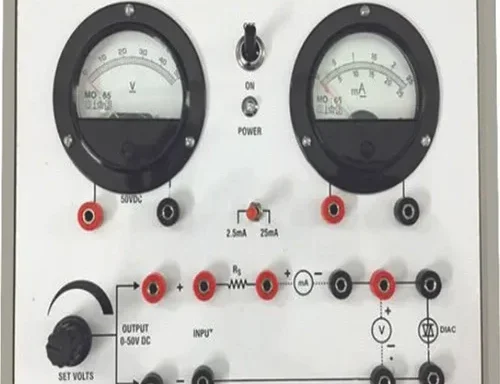
DIAC Characteristic Apparatus
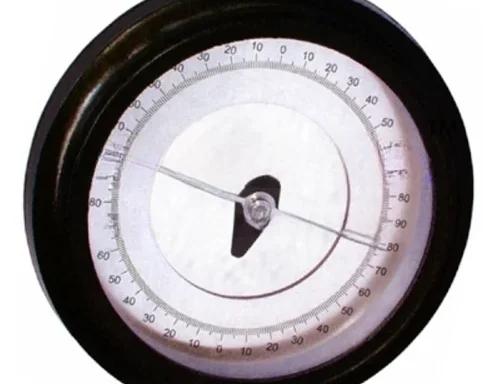
Deflection Magnetometer Compass
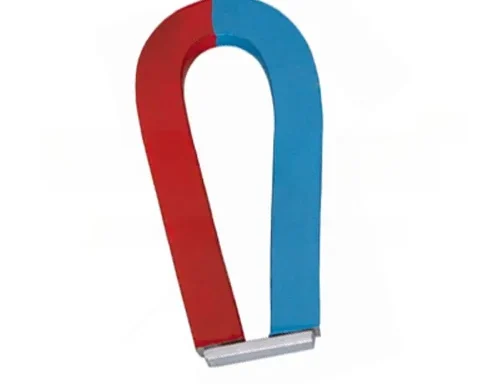
Horse Shoe Magnet

Auxiliary Items Copper rod 15cm length and 0.4cm diameter