
Center hole hydraulic jacks, with their hollow design allowing rods/cables to pass through, are versatile tools for heavy-duty pushing, pulling, tensioning, and lifting in construction (bridges, post-tensioning), oil & gas, shipbuilding, and mining, enabling tasks like stressing anchor bolts or pulling machinery, unlike standard jacks that only lift. They come in single-acting (spring return) and double-acting (hydraulic return) types for controlled force application in demanding industrial settings.
Description
Central Hole Design and Function : Hydraulic Jack Central Hole Type
Hydraulic Jack Central Hole Type feature a hollow piston design. This design allows rods, cables, or threaded components to pass through the center. Students can easily understand how force acts along a central axis. Unlike standard jacks, this structure helps explain axial force transmission and load alignment clearly.
Educational Demonstration of Hydraulic Applications
This educational working model demonstrates pushing, pulling, tensioning, and lifting operations. Standard jacks usually perform lifting only. However, the central hole type allows instructors to explain additional hydraulic functions. As a result, students gain broader insight into real-world hydraulic applications through safe demonstrations.
Single-Acting and Double-Acting Concepts : Hydraulic Jack Central Hole Type
The model helps students understand single-acting and double-acting hydraulic systems. In single-acting systems, springs assist the return motion. In double-acting systems, hydraulic pressure controls both extension and retraction. Students can compare control and response behavior during experiments.
Learning Outcomes and Concept Clarity
This working model improves understanding of tensioning and controlled force application. Students connect theory with practice through hands-on learning. As a result, technical comprehension and analytical skills improve during hydraulics studies.
This educational working model can be effectively integrated with other educational working models and laboratory kits to enhance hands-on learning in engineering and technical laboratories. In addition, institutions may also explore complementary learning solutions such as Jaadui Pitara educational learning kits to support interactive and concept-based education.
See also different:

Auxiliary Items Glass ball with Stand 80mm Dia with Crystal Stand
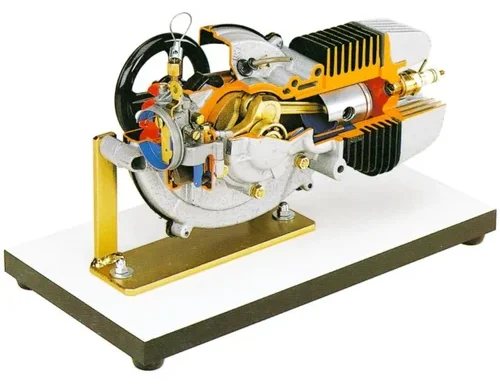
Two Strokes Scooter Engine
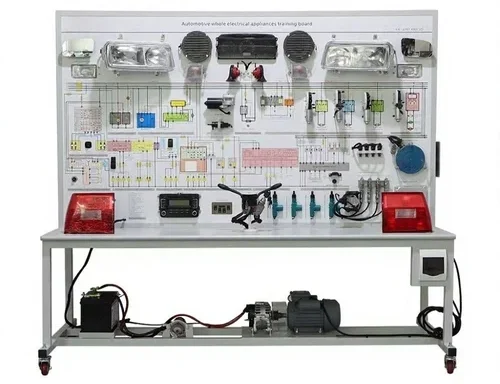
Electrical Equipment Board of a Car for Automotive Electrical Training

CHAM-CHAM 555 SCRUB WOOL SCRUBER 8 gms