
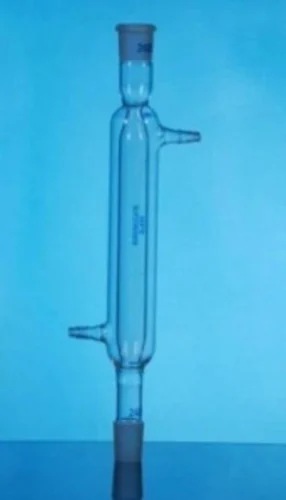
A glass Liebig condenser cools hot vapors back into liquids, primarily used in distillation to separate substances, and also for reflux to keep solvents from escaping during prolonged heating, featuring a straight inner tube for vapor and an outer water jacket for cooling. Its simple design, often with ground glass joints, makes it essential for basic chemistry labs to prevent volatile loss, improve yields, and ensure safer experiments.
Description
Introduction to Glass Liebig Condenser
Glass Liebig Condenser is a fundamental laboratory apparatus used in chemistry experiments involving condensation of vapors. Laboratories widely use this condenser during distillation and reflux processes. Its design allows hot vapors to cool and convert back into liquid form efficiently.
The condenser consists of a straight inner glass tube surrounded by an outer water jacket. Cold water flows through the jacket to absorb heat from the vapors passing inside the inner tube. As a result, vapors condense into liquid and can be collected safely.
Chemistry laboratories, research institutions, and educational facilities frequently use this apparatus because it provides reliable vapor cooling and prevents loss of volatile substances during experiments.
Working Principle of Glass Liebig Condenser
The apparatus works on the principle of heat exchange and condensation. When a liquid mixture is heated during distillation, it produces vapors that travel into the condenser.
Cold water circulates through the outer jacket of the condenser. Consequently, the vapor inside the inner tube loses heat. As the temperature decreases, the vapor condenses into liquid.
This condensed liquid then flows out of the condenser into a receiving container. Therefore, the apparatus allows separation and collection of liquids based on their boiling points.
Applications of Glass Liebig Condenser
Chemistry laboratories commonly use this condenser in distillation experiments. It helps separate liquids with different boiling points by condensing the vapors produced during heating.
Additionally, the condenser is widely used in reflux experiments. In reflux systems, vapors condense and return to the reaction flask. As a result, the reaction can continue for extended periods without losing solvent.
Researchers also use this apparatus in organic chemistry experiments, purification processes, and solvent recovery procedures.
Features
This laboratory condenser includes several features that support safe and efficient condensation processes.
Firstly, the straight inner tube design allows smooth vapor flow. Secondly, the outer water jacket provides continuous cooling.
Key features include:
- High-quality laboratory glass construction
- Efficient vapor condensation system
- Outer water jacket for continuous cooling
- Compatible with standard laboratory distillation setups
- Durable and easy to use in chemistry laboratories
These features make the apparatus suitable for repeated laboratory experiments.
Educational Importance
Practical chemistry education requires demonstration of distillation and condensation processes. Therefore, laboratories commonly use this condenser during chemistry practical sessions.
Students learn how vapor condensation occurs and how different substances can be separated using distillation techniques. Moreover, the apparatus helps learners understand heat transfer and phase changes in chemical reactions.
Consequently, it becomes an important teaching tool in chemistry laboratories. Many institutions integrate such laboratory apparatus with other scientific equipment available here:
https://www.aseducationalkits.com/products-category/physics-lab-equipment/
Industrial Uses
Distillation and condensation processes are widely used in chemical industries. Therefore, understanding the operation of laboratory condensers is essential for chemical engineering and industrial chemistry.
Industries use similar condensation systems in chemical production, pharmaceutical manufacturing, and solvent recovery systems. Additionally, these systems play an important role in petrochemical processing and laboratory research.
Further laboratory instruments and scientific equipment catalogues can also be explored here:
https://interlabs.in/products-catalogue/
Conclusion
Glass Liebig Condenser is an essential laboratory device used for cooling vapors and converting them into liquid during distillation and reflux experiments. Its simple design, efficient cooling system, and compatibility with standard laboratory setups make it highly reliable.
Therefore, it remains an important apparatus for chemistry education, laboratory research, and industrial chemical processes.
See also different:
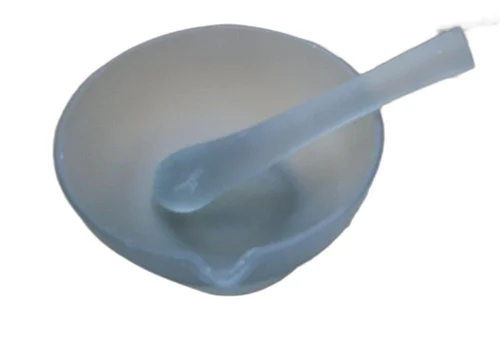
Pestle And Mortar Soda Glass
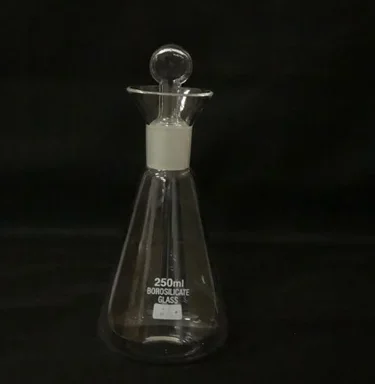
Borosilicate Glass conical Flask
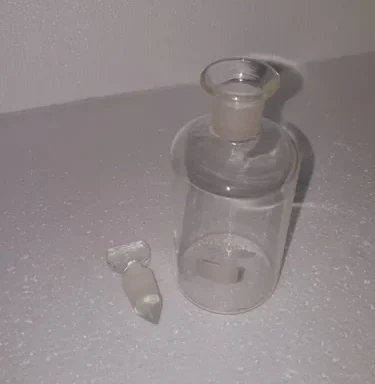
Borosilicate Glass BOD Bottle
Glass Filter Assembly