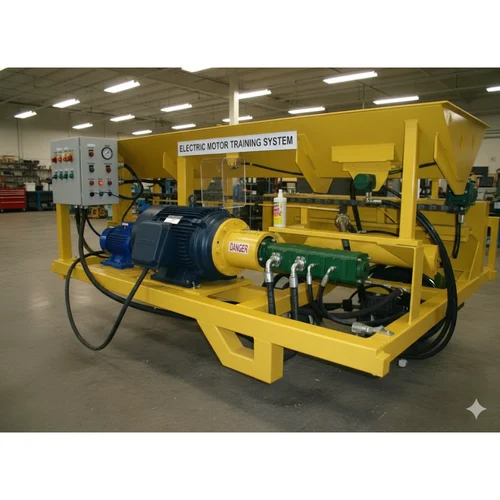
Electric Motor – Engineering Lab Training System (Catalogue No.: AS-INT-TVET-DVET-050)
The Electric Motor training system is a practical educational unit designed to demonstrate the working principles and characteristics of AC and DC motors. It is used extensively in TVET and DVET institutions across Africa, serving learners in cities such as Nairobi Kenya, Lagos Nigeria, Accra Ghana, Johannesburg South Africa, Dakar Senegal, Addis Ababa Ethiopia, Lusaka Zambia, Harare Zimbabwe, Freetown Sierra Leone, and Maputo Mozambique.
Description
Electric Motor Training System for Motor Operation Studies
The Electric Motor Training System provides a practical platform for learning electric motor operation through direct experimentation. The system includes multiple AC and DC motor types mounted securely on a stable test bench. Students can observe motor behavior while measuring voltage, current, speed, and torque in real time. As a result, theoretical concepts become clear and measurable. Training institutes in countries across Africa widely use this system to strengthen foundational electrical engineering education.
Electric Motor Training System for Performance Analysis
Features integrated measuring instruments that allow detailed performance evaluation. Students can study how changes in voltage and load affect speed, current, and torque output. Therefore, learners gain a clear understanding of motor characteristics and efficiency. Clear labeling and component identification further simplify learning. These features help students follow correct testing procedures during laboratory sessions.
Enhances Practical Electrical Engineering Skills
Supports hands-on experiments in motor testing and basic motor control. Consequently, students develop essential skills such as wiring, measurement interpretation, and fault identification. The system encourages active participation, which improves confidence and technical accuracy. Moreover, repeated experimentation reinforces learning outcomes in electrical and mechanical vocational programs.
Supports Vocational and Technician Training
Aligns well with vocational curricula for electrical and mechanical training programs. It prepares learners for technician roles by introducing practical competencies used in industrial electrical applications. In addition, the system supports structured skill development initiatives implemented in training centers across regions such as Kenya, Nigeria, Ghana, and South Africa. These practical skills improve workforce readiness and employability.
Tender-Ready and Curriculum Compliant Design
This Electric Motor Training System meets educational standards required for vocational and donor-funded projects. Durable construction ensures reliable performance during continuous student use. The system is supplied with detailed manuals and instructional materials, which support instructors during experiment planning and assessment. Therefore, institutions can integrate the system into existing laboratory setups without difficulty.
Application Areas
Technical and vocational institutes use the Electric Motor Training System for electrical engineering education. Mechanical training centers rely on it for combined electro-mechanical studies. Skill development programs also adopt the system to enhance practical learning outcomes. In addition, development projects select this system to strengthen vocational education infrastructure.
This product is intended strictly for education and demonstration use only and not for industrial or production applications. Overall, the Electric Motor Training System offers a structured and reliable way to connect electrical motor theory with hands-on laboratory experience.
other educational working models and laboratory kits to enhance hands-on learning in engineering and technical laboratories. In addition, institutions may also explore complementary learning solutions such as Jaadui Pitara educational learning kits to support interactive and concept-based education.
See also different:
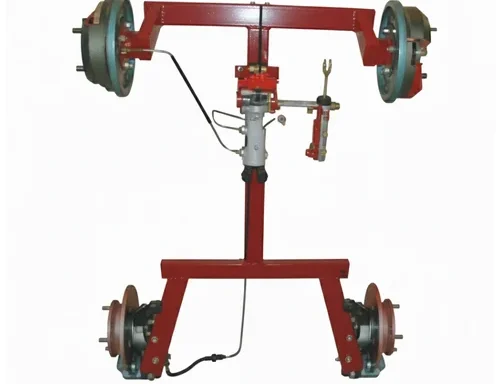
Hydraullic Brake Unit With Four Brake Drum
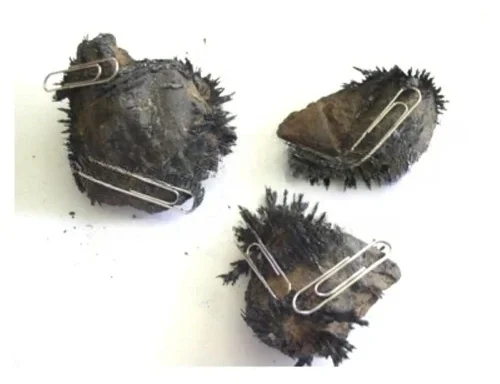
Load Stone Magnet Educational Working Model for Physics and Science Laboratories

Auxiliary Items Sand clock
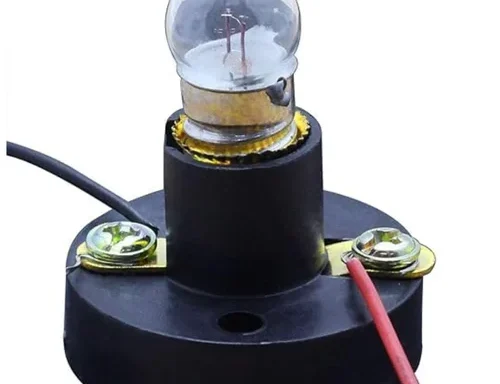
Torch Bulb with Holder for Basic Electricity Learning