
Demonstration Differential Gear – Engineering Training System (African TVET/Vocational Focus)
The **Demonstration Differential Gear** is an all-metallic, sectionized model designed to explicitly show the working principles of a vehicle differential gearbox. Widely used in technical and vocational education and training (TVET/DVET) programs across Africa, this educational tool supports skill development initiatives in key cities including Casablanca (Morocco), Addis Ababa (Ethiopia), Dakar (Senegal), Lagos (Nigeria), Lusaka (Zambia), Accra (Ghana), Kigali (Rwanda), Nairobi (Kenya), Maputo (Mozambique), and Freetown (Sierra Leone).
Description
Demonstration Differential Gear for Understanding Power Distribution
The Demonstration Differential Gear helps students clearly understand how torque distributes between driving wheels. This model includes precision-machined metallic gears that replicate real automotive differential operation. It also features a rear axle assembly with brake drums and wheels, which enhances realism during demonstrations. Therefore, learners can connect theoretical concepts with real mechanical movement. Training institutes across Morocco, Ethiopia, Senegal, Nigeria, and other African countries widely use this model for hands-on automotive education.
Demonstration Differential Gear for Classroom and Workshop Training
This Demonstration Differential Gear is securely mounted on a compact 45 × 45 cm wooden base, which ensures stability during demonstrations. As a result, instructors can explain gear mechanics safely and clearly. The sectionized design allows students to observe gear engagement and speed variation during turns. Moreover, the robust construction supports repeated use in classrooms and workshops without frequent maintenance.
Enhances Practical Automotive Skills
The Demonstration Differential Gear provides clear visualization of torque transmission and differential action. Consequently, students can understand why wheels rotate at different speeds during cornering. This clarity supports automotive technology syllabi followed in cities such as Casablanca, Addis Ababa, and Dakar. In addition, the model strengthens hands-on skills training for vehicle mechanics in Lagos and Lusaka. These practical experiences complement theoretical lessons taught in Accra, Kigali, and Nairobi.
Supports TVET and Workforce Development Programs
This Demonstration Differential Gear aligns well with TVET and vocational training curricula across Africa. It supports skill development initiatives aimed at improving employability in automotive maintenance and repair. Furthermore, compatibility with blended learning environments allows instructors to combine physical demonstrations with digital learning tools. These features help prepare learners for real-world workshop environments.
Tender-Ready and Curriculum Compliant Design
The Demonstration Differential Gear meets international standards required for donor-supported educational projects. Durable materials ensure long-term use with minimal upkeep. The system includes instructor manuals and student guides tailored specifically for African TVET programs. Therefore, institutions can integrate the model into existing curricula with ease.
Application Areas
Polytechnic and vocational institutes use the Demonstration Differential Gear for automotive engineering instruction. Technical training centers in Ethiopia, Kenya, Rwanda, and Zambia rely on it for practical skill development. Automotive workshops in Mozambique and Sierra Leone also use this model for foundational training. In addition, pan-African education initiatives select this system to strengthen technical education and workforce readiness.
This product is intended strictly for education and demonstration use only and not for industrial or vehicle installation purposes. Overall, the Demonstration Differential Gear offers a durable and effective way to transform automotive theory into clear, practical learning experiences.
This educational working model can be effectively integrated with other educational working models and laboratory kits to enhance hands-on learning in engineering and technical laboratories. In addition, institutions may also explore complementary learning solutions such as Jaadui Pitara educational learning kits to support interactive and concept-based education.
See also different:
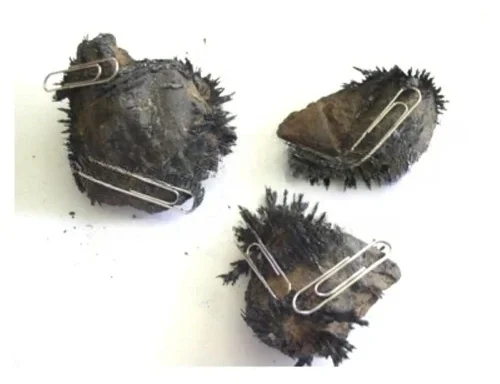
Load Stone Magnet Educational Working Model for Physics and Science Laboratories

Magnet Ball Ended
Auxiliary Items Black chart paper 70×56 cm, 180 gsm
Auxiliary Items Saw dust Standard (Packet of 50 gm)