
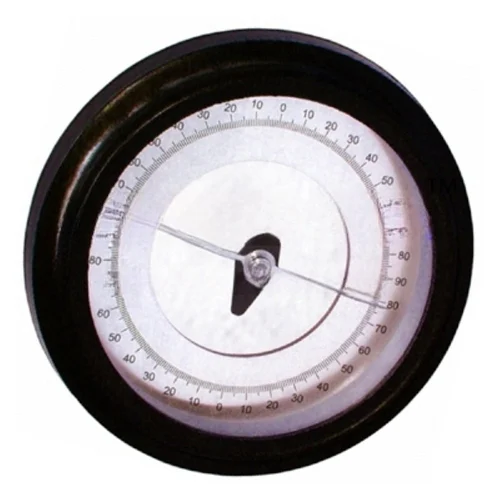
A deflection magnetometer compass is a lab instrument used in physics to measure magnetic fields, compare magnetic moments of magnets, and verify magnetic laws like the inverse square law, primarily by observing the angular deflection of a small magnetic needle caused by an external magnetic source or Earth’s magnetic field. Key uses include determining the Earth’s horizontal magnetic field (
Description
The Deflection Magnetometer Compass is a standard laboratory instrument used in physics education to study magnetic fields and magnetic properties through angular deflection. It helps students observe how an external magnetic source or Earth’s magnetic field causes a small magnetic needle to deflect. As a result, learners can directly connect theoretical magnetic laws with measurable experimental outcomes.
Physics laboratories in schools and colleges across India commonly use deflection magnetometer compasses for practical experiments. In addition, educational institutions in countries such as the United Kingdom, South Africa, and Kenya rely on this apparatus to teach magnetism concepts accurately and consistently.
Deflection Magnetometer Compass for Magnetic Field Measurement
The Deflection Magnetometer Compass allows students to measure magnetic field strength by observing the angle through which the magnetic needle deflects when placed near a bar magnet. Teachers use this setup to demonstrate how magnetic force varies with distance. Therefore, learners can experimentally verify the inverse square law of magnetism.
Because the compass responds sensitively to magnetic influence, students can record precise angular readings. Moreover, this controlled observation improves understanding of magnetic interactions and field behavior.
Deflection Magnetometer Compass for Earth’s Magnetic Field Study
The Deflection Magnetometer Compass plays a key role in determining the horizontal component of Earth’s magnetic field. During laboratory experiments, students position the magnetometer relative to Earth’s field and calculate magnetic parameters using deflection angles. Consequently, abstract geophysical concepts become practical and measurable.
The apparatus also helps compare magnetic moments of different magnets. As a result, learners understand how magnet strength varies based on material and geometry.
Clear Scale, Stable Base, and Student-Friendly Design
The instrument features a clear circular scale with fine angular markings that allow accurate deflection readings. Additionally, a stable base ensures minimal vibration during experiments. This design supports repeatable results and smooth classroom demonstrations.
Suitable for Education and Demonstration Use
This deflection magnetometer compass is suitable for school physics laboratories, college practical classes, teacher training institutes, and science exhibitions. It aligns well with curricula covering magnetism, electromagnetic theory, and Earth’s magnetic field.
Applications
- Measuring magnetic field strength
- Studying angular deflection in magnetism
- Determining Earth’s horizontal magnetic field
- Verifying inverse square law of magnetism
- Physics laboratory experiments and demonstrations
For institutions and laboratories planning to expand their scientific infrastructure, a wide range of biology laboratory instruments and teaching aids is available at
https://www.aseducationalkits.com/products-category/biology-lab-equipments/
In addition, educators and procurement teams can explore a broader selection of educational science items and classroom resources at
https://www.labscientificequipments.com/product-category/educational-items/
See also different:
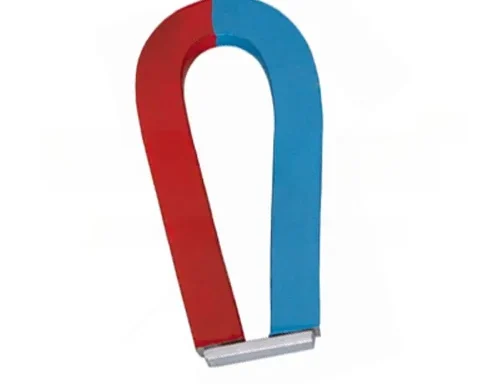
Horse Shoe Magnet

Auxiliary Items Copper rod 15cm length and 0.4cm diameter
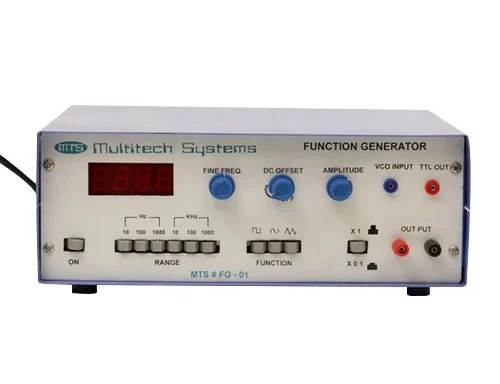
Digital Function Generator
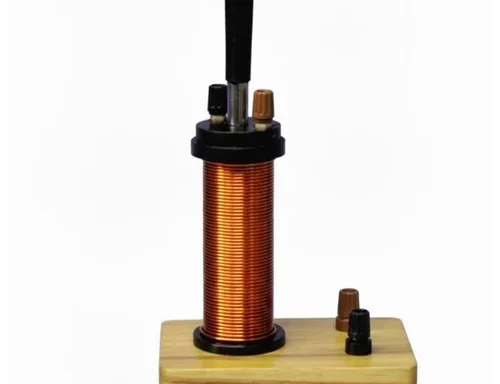
Induction Coil Demonstration Model