Biology lab specimens (like blood, tissue, urine, or whole organisms) are crucial for diagnosis, disease monitoring, drug development, personalized medicine, and fundamental research, helping scientists understand health, identify pathogens, study disease mechanisms (like cancer or microbiome), and create new tests and therapies for various conditions, acting as vital tools for identifying trends and revealing biological secrets.
Description
Introduction to Biology Lab Specimen
Biology Lab Specimen is an essential educational and research resource used in biological laboratories for studying living organisms, tissues, and biological materials. These specimens allow students and researchers to observe biological structures and processes directly. As a result, they support deeper understanding of life sciences and biological systems.
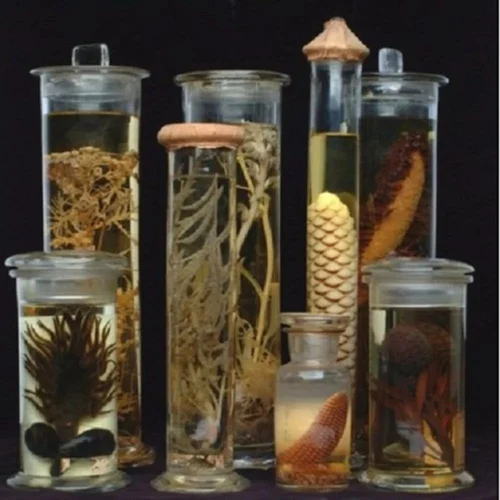
Biology laboratories commonly use specimens such as blood samples, plant tissues, microorganisms, preserved organisms, and anatomical samples. Moreover, these specimens help scientists examine cellular structures, biological functions, and disease mechanisms. Therefore, they play a crucial role in biological education, diagnostics, and scientific research.
Through careful observation and analysis, learners can understand how living organisms function and interact with their environment.
Working Principle of Biology Lab Specimen
Biological specimens are studied through observation, analysis, and experimentation. Researchers collect samples from organisms or biological systems and prepare them for laboratory examination.
Scientists often use microscopes, staining techniques, and analytical instruments to observe the specimen. Consequently, they can examine cellular structures, microorganisms, and tissue composition.
In many cases, specimens are preserved to maintain their structure for educational study. As a result, students can analyze biological features without degradation.
These procedures help researchers understand biological processes such as cell function, microbial growth, and disease development.
Applications of Biology Lab Specimen
Biology laboratories use specimens for many scientific and medical investigations. For instance, medical laboratories analyze blood and tissue samples to diagnose diseases.
Researchers also use specimens to study pathogens, microorganisms, and genetic material. Moreover, scientists examine biological samples to understand disease mechanisms such as infections or cellular abnormalities.
Educational institutions use specimens to teach anatomy, microbiology, and environmental biology. Consequently, students gain hands-on experience in observing biological structures and organisms.
Features
Biological specimens used in laboratories offer several features that support scientific learning and research.
Firstly, they provide real biological material for observation and experimentation. Secondly, preserved specimens maintain structural details for long-term study.
Key features include:
- Suitable for biological observation and research
- Useful for studying tissues, organisms, and microorganisms
- Supports educational laboratory experiments
- Preserved specimens maintain structural accuracy
- Compatible with microscopes and laboratory equipment
These features make specimens valuable tools for biology education and research.
Educational Importance
Hands-on learning is essential in biological sciences. Therefore, biology laboratories rely on specimens to help students understand complex biological concepts.
Students can observe real biological structures and analyze their characteristics. Moreover, they learn laboratory techniques such as microscopy, staining, and specimen handling.
Consequently, these experiences improve scientific thinking and analytical skills. Many educational laboratories also integrate biological specimens with other laboratory equipment available here:
https://www.aseducationalkits.com/products-category/physics-lab-equipment/
Industrial Uses
Biological specimens play an important role in medical and pharmaceutical research. Scientists use them to study disease mechanisms, test new drugs, and develop diagnostic methods.
Additionally, biotechnology laboratories analyze biological samples to understand genetic information and microbial activity. Environmental scientists also examine biological specimens to study ecosystems and biodiversity.
Further scientific instruments and laboratory equipment catalogues can also be explored here:
https://interlabs.in/products-catalogue/
Conclusion
Biology Lab Specimen is an essential resource for biological research, medical diagnostics, and educational laboratories. These specimens help scientists study organisms, tissues, and biological processes in detail.
Therefore, they remain valuable tools for advancing biological knowledge, improving healthcare research, and supporting practical science education.