
Stability Of A Floating Body – Engineering Lab Training System (AS-INT-TVET-DVET-007)The Stability Of A Floating Body apparatus is a fundamental training system designed to teach the principles of floatation and stability, essential to naval architecture and marine engineering. It is commonly used by universities, polytechnics, and TVET/DTVET institutes involved in marine engineering, civil engineering, and fluid mechanics education—especially within international projects funded by the World Bank, Asian Development Bank (ADB), African Development Bank (AfDB), and other development agencies.
Description
This system enables investigation of the metacenter position and stability characteristics of model hulls under various loading and weight distribution conditions. A transparent model hull with rectangular cross-section, mounted in a water tank, allows clear visualization of the stability behavior. Sliding weights permit adjustment of the center of gravity, while scales and inclinometers provide precise measurements of draft and heel angles.
Key FeaturesTransparent rectangular model hull with sliding weights for center of gravity adjustments.
Water tank for floatation and stability experiments.
Inclinometer for accurate measurement of heel angle.
Scale markings on hull and weights for easy reading of positions and drafts.
Compact, robust design suitable for classroom and laboratory use.
Practical Experimental CapabilitiesDetermination of metacenter location and stability margin for floating bodies.
Analysis of heel angle response to shifting loads and center of gravity changes.
Study of equilibrium conditions and restoring moments in floating bodies.
Visualization of fundamental naval engineering concepts related to stability.
Hands-on training in floatation, stability, and hydrostatics for engineering students.
Educational BenefitsSupports marine and naval architecture education by demonstrating critical stability concepts.
Essential for TVET/DTVET programs addressing shipbuilding, offshore engineering, and marine safety.
Facilitates practical understanding of buoyancy and hydrostatic forces in fluids.
Ideal for use in donor-funded capacity building projects focused on marine engineering skills.
Tender-Ready FeaturesDesigned to comply with specifications for donor and development agency-funded procurement.
Durable materials and easy-to-operate design ensure long-lasting educational use.
Supplied with detailed instructional materials to support effective teaching and experiment conduction.
Suitable for integration into marine and fluid mechanics laboratories worldwide.
ApplicationsUniversities and technical institutes offering naval architecture and marine engineering courses.
TVET and vocational schools focused on marine and offshore industries.
Research centers studying floatation and stability phenomena.
Development projects aimed at strengthening marine engineering education infrastructures.
See also different:
Properties Of Fluids And Hydrostatics Bench Get Best Quote
Air Compressor Engineering Lab Training Systems
Demonstration Tractor Differential Model
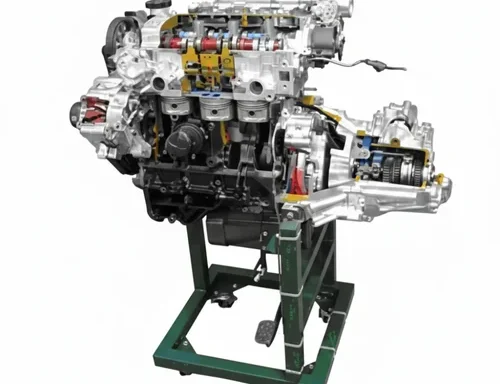
Educational Car Model Engineering Lab Training Systems