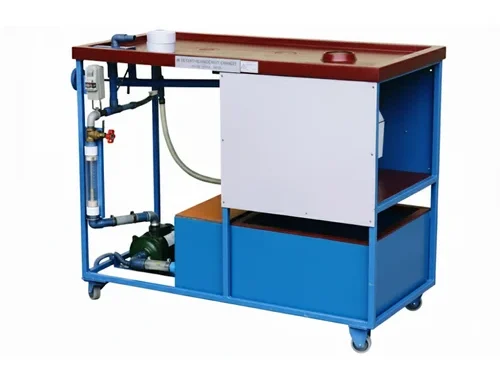
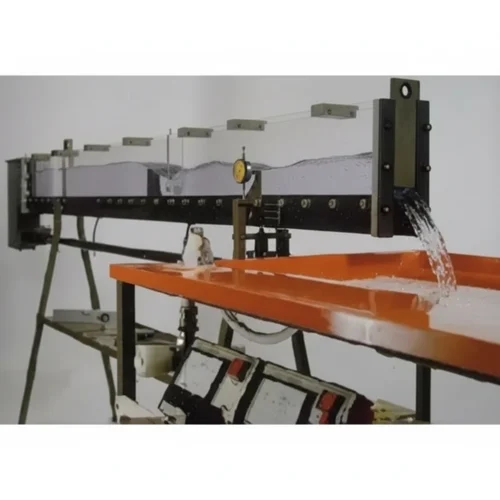
Flow Channel – Engineering Lab Training System (AS-INT-TVET-DVET-020)The Flow Channel is a specialized training apparatus designed to demonstrate fluid flow over weirs and visualize streamlines around various drag models. Widely adopted across polytechnic and engineering colleges, this unit complies with the latest curriculum standards and international tender requirements from agencies such as the World Bank, Asian Development Bank (ADB), and African Development Bank (AfDB).
The unit features a flow straightener to ensure low turbulence, a transparent channel for clear observation, and fine nozzles for ink injection to vividly illustrate flow patterns. It supports interchangeable weirs and drag bodies, allowing diverse experimental setups to study fluid behavior and drag effects under controlled hydraulic conditions.
Key FeaturesTransparent flow channel with flow straightener for uniform flow.
Description
Ink injection system enabling clear visualization of fluid streamlines.
Six interchangeable weirs and drag bodies for versatile experiments.
Adjustable water height via outlet orifice for precise flow regulation.
Closed water circuit allowing use without external water supply.
Educational BenefitsDemonstrates key fluid mechanics concepts including flow separation and drag.
Enhances understanding of hydraulic jump, critical flow, and free surface flow.
Provides practical learning in line with current engineering and polytechnic syllabi.
Supports blended learning approaches by combining experiment and simulation.
Aids development of essential skills in fluid dynamics and hydraulic engineering.
Tender and Compliance FeaturesCompliant with donor agency procurement standards for development projects.
Durable construction ideal for rigorous academic use and long-term training programs.
Includes comprehensive teaching manuals and experiment guides tailored to global curricula.
Compatible with digital sensors and data acquisition technologies for modern labs.
ApplicationsPolytechnic and engineering institutions focusing on hydraulics and fluid mechanics.
Vocational training centers building practical skills in hydraulic design.
Research laboratories requiring detailed flow patterning tools.
International donor-supported education projects enhancing lab facilities and training quality.