Nursery school furniture plays a vital role in creating a safe, engaging, and developmentally appropriate learning environment for young children. Designed specifically for early childhood education, this furniture supports the physical comfort, emotional well-being, and cognitive development of toddlers and preschoolers. Each piece is crafted to promote independent learning, social interaction, and hands-on exploration, making it an essential component of any nursery or kindergarten classroom. With thoughtfully designed proportions, smooth edges, and child-friendly materials, nursery school furniture ensures that children can move, play, and learn freely in a space tailored to their needs. Its ergonomic construction encourages proper posture during activities and reduces the risk of accidents, making it ideal for active learning environments where safety and durability are top priorities.
Description
Nursery School Furniture for Safe and Functional Classrooms
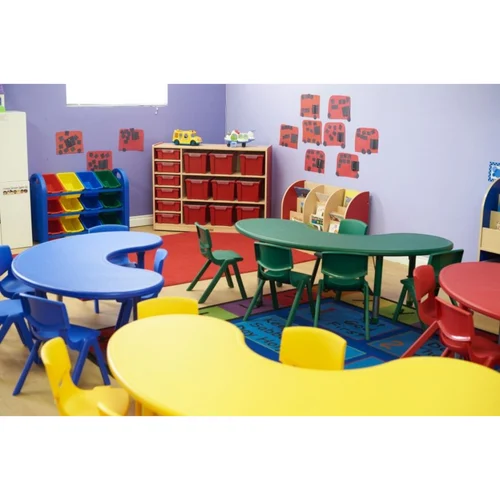
Nursery School Furniture plays a vital role in shaping comfortable and effective learning spaces for young children. This furniture range includes tables, chairs, storage units, book racks, play stations, and activity benches. Each item supports daily classroom use while maintaining comfort and functionality. Manufacturers use sturdy and non-toxic materials such as hardwood, engineered wood, and high-grade plastic. Therefore, the furniture offers long-lasting performance with minimal maintenance. Smooth and rounded surfaces also make cleaning easy, which helps educators maintain hygienic classrooms in India, the UK, Australia, and other countries focused on early childhood safety.
Nursery School Furniture Designed for Child Comfort
Nursery School Furniture features lightweight yet durable construction, which allows teachers to rearrange classroom layouts with ease. As a result, educators can adapt spaces for group activities, creative play, or quiet reading sessions. Child-sized tables and chairs support drawing, writing, puzzles, and collaborative work. Consequently, children develop fine motor skills, communication abilities, and social interaction skills naturally through daily use.
Encourages Creativity and Independent Learning
Bright colors and engaging shapes create a lively classroom atmosphere that stimulates curiosity and creativity. Therefore, children feel more comfortable and motivated to participate in activities. Storage units with open shelves and accessible compartments promote independence. Children can retrieve and store learning materials on their own, which builds responsibility and confidence. Moreover, organized storage supports structured learning routines and smoother classroom transitions.
Supports Structured Learning Environments
Nursery School Furniture helps educators define learning zones such as reading corners, art stations, and play areas. This structure improves classroom management and helps children understand daily routines. Teachers benefit from efficient organization, which allows them to focus more on instruction and interaction. Additionally, the furniture adapts well to different educational approaches, including Montessori learning, play-based education, skill development programs, and creative arts activities.
Durable and Safety-Focused Construction
Durability remains a key feature of Nursery School Furniture. Materials resist wear, stains, and impact, which ensures reliable use over several academic years. Safety features such as rounded edges, anti-tip designs, and secure fasteners reduce risk during classroom activities. As a result, educators can maintain a worry-free learning environment for children.
This product range is intended strictly for education and demonstration use only and not for domestic or industrial applications. Overall, Nursery School Furniture provides long-term value by combining safety, comfort, and versatility. It supports nurturing learning environments where young minds can grow with confidence and creativity.
This educational working model can be effectively integrated with other educational working models and laboratory kits to enhance hands-on learning in engineering and technical laboratories. In addition, institutions may also explore complementary learning solutions such as Jaadui Pitara educational learning kits to support interactive and concept-based education.