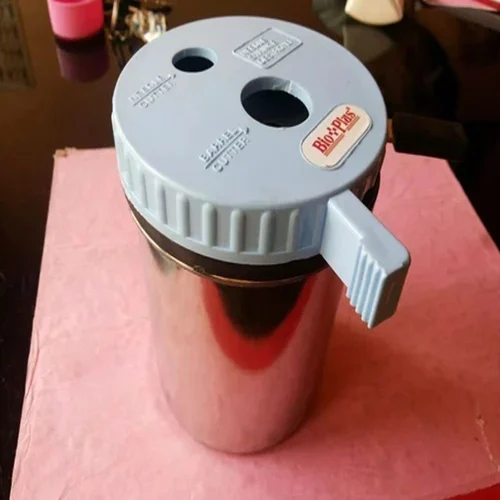
Needle Cutter Destroyers are essential medical devices in healthcare settings (hospitals, clinics, labs) used to safely dispose of used needles and syringes, preventing needlestick injuries, needle reuse, and the spread of infections/diseases like HIV/Hepatitis. They work by either electrically incinerating (melting/burning) or manually cutting the needle and syringe hub, making them unusable and facilitating proper biomedical waste management, with both electric and manual options available for different needs.
Description
Needle Cutters Destroyers are critical safety devices used in hospitals, clinics, diagnostic laboratories, and healthcare facilities to ensure immediate and secure disposal of used needles and syringe hubs. They prevent accidental needlestick injuries and completely eliminate the risk of needle reuse. As a result, they play an important role in infection control and safe biomedical waste management.
Healthcare institutions across India actively use needle cutters destroyers to comply with biomedical waste handling rules. Similarly, medical facilities in countries such as the United Kingdom, South Africa, and Kenya rely on these devices to protect healthcare workers from exposure to bloodborne infections.
Needle Cutters Destroyers for Infection Prevention
Needle Cutters Destroyers help control the spread of serious infections such as HIV, Hepatitis B, and Hepatitis C. Medical staff can destroy needles immediately after use, which removes sharp hazards at the point of care. Therefore, these devices significantly reduce occupational risk in high-volume injection environments.
Because the destruction process makes needles permanently unusable, it also prevents illegal reuse and unsafe recycling. Moreover, this immediate disposal improves overall hygiene and safety in clinical workflows.
Needle Cutters Destroyers for Biomedical Waste Management
Needle Cutters Destroyers support proper biomedical waste segregation by separating sharps from syringe bodies. Electric models use controlled heat to melt or incinerate needles, while manual versions cut needles using hardened blades. Consequently, healthcare facilities can choose a solution that matches their workload, power availability, and operational needs.
Both electric and manual destroyers reduce sharps waste volume, which makes collection and final disposal easier. In addition, compact designs allow easy placement on workstations, trolleys, or vaccination desks.
Electric and Manual Options for Different Needs
Electric needle destroyers offer quick, high-efficiency operation for hospitals and busy clinics. Manual needle cutters, on the other hand, provide a cost-effective and power-free solution for smaller facilities, mobile clinics, and outreach programs. Therefore, both options remain essential in diverse healthcare settings.
Suitable for Clinical and Institutional Use
These devices are suitable for hospitals, clinics, diagnostic labs, blood banks, vaccination centers, medical camps, and laboratories. They support routine injections, immunization drives, and laboratory procedures while maintaining strict safety standards.
Applications
- Safe destruction of used needles and syringe hubs
- Prevention of needlestick injuries
- Infection control in healthcare environments
- Biomedical waste segregation and volume reduction
- Compliance with medical waste management guidelines
other educational working models and laboratory kits to enhance hands-on learning in engineering and technical laboratories. In addition, institutions may also explore complementary learning solutions such as Jaadui Pitara educational learning kits to support interactive and concept-based education.