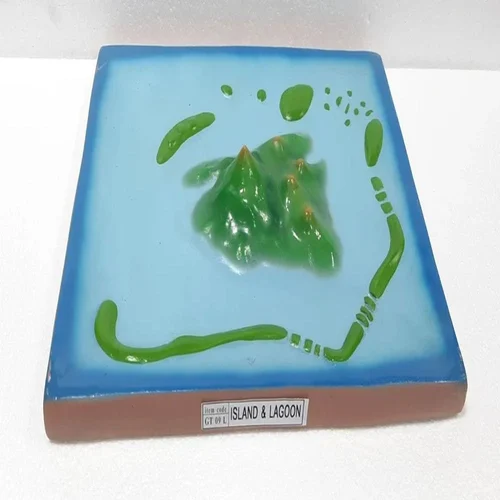
Biology lab models are crucial for visual learning, helping students understand complex structures (like cells, organs, DNA) and processes (like organ systems, cell division) through interactive, tangible representations, supporting practical exams without live specimens, offering cost-effective & reusable teaching tools, and aiding research by simulating systems for easier study, from microbiology to human anatomy.
Description
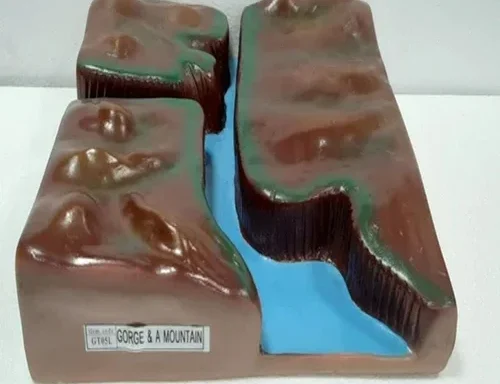
The Geological Laboratory Model is an essential educational tool designed to support visual and hands-on learning in earth science and geology. It helps students understand complex geological structures, materials, and processes through clear and tangible representations. As a result, learners can easily connect theoretical concepts with real-world geological phenomena.
Schools, colleges, and training institutes across India widely use geological laboratory models for geography and earth science education. In addition, educational institutions in countries such as the United Kingdom, South Africa, and Kenya rely on these models to enhance concept clarity without the need for field samples in every session.
Geological Laboratory Model for Visual Learning
The Geological Laboratory Model allows students to study rocks, minerals, fossils, landforms, and internal Earth structures in a structured and interactive manner. Teachers use these models to explain topics such as rock cycles, stratification, faulting, folding, and mineral classification. Therefore, learners gain a strong conceptual foundation through observation and guided explanation.
Because the models often feature enlarged and clearly labeled components, students can easily identify structures and understand spatial relationships. Moreover, this visual approach improves retention and supports effective revision before examinations.
Geological Laboratory Model for Practical Education and Demonstration
The Geological Laboratory Model plays a vital role in practical education by providing a reusable and consistent teaching resource. Institutions use these models to demonstrate geological processes such as erosion, deposition, volcanism, and tectonic movement. Consequently, students can observe process-based learning without relying solely on diagrams or outdoor fieldwork.
In advanced education, geological models also support preliminary research learning. As a result, students understand geological systems and interactions before engaging in field surveys or laboratory analysis.
Durable, Cost-Effective, and Reusable Design
Geological laboratory models are made from durable materials that withstand repeated classroom and laboratory handling. Additionally, their reusable design makes them a cost-effective solution for long-term academic use. Clear labeling and sturdy construction ensure consistent performance across multiple academic years.
Suitable for Education and Academic Study
This geological laboratory model is suitable for school laboratories, colleges, universities, teacher training institutes, and earth science learning environments. It supports geology, geography, and environmental science education effectively.
Applications
- Teaching rocks and minerals classification
- Understanding geological structures and landforms
- Demonstrating Earth processes and rock cycles
- Practical exam preparation
- Classroom and laboratory demonstrations
For institutions and laboratories planning to expand their scientific infrastructure, a wide range of biology laboratory instruments and teaching aids is available at
https://www.aseducationalkits.com/products-category/biology-lab-equipments/
In addition, educators and procurement teams can explore a broader selection of educational science items and classroom resources at
https://www.labscientificequipments.com/product-category/educational-items/