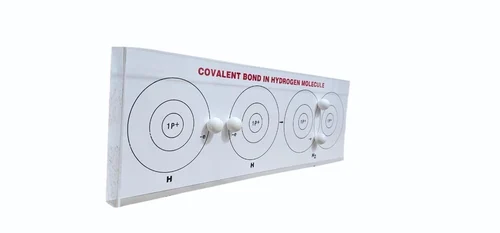
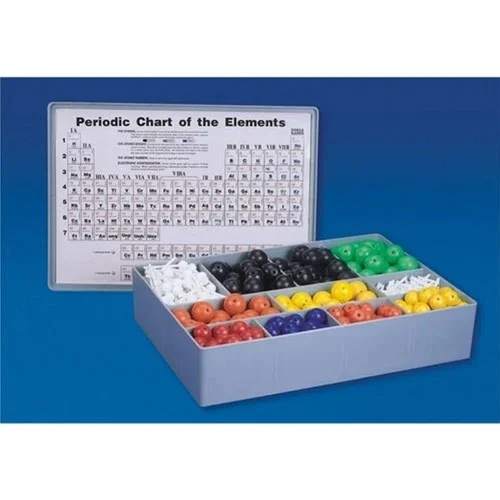
Atomic model sets are hands-on educational tools used in schools and labs to visualize complex chemistry concepts like atomic structure, molecular geometry, and chemical bonding (single, double, triple bonds) by building 3D representations of atoms and molecules, aiding understanding in organic/inorganic chemistry, and serving as classroom/lab displays.
Description
An atomic model set is a hands-on educational tool designed to help students and learners visualize complex concepts in chemistry. It allows the construction of three-dimensional representations of atoms and molecules, making abstract topics easier to understand. Because visual learning improves conceptual clarity, atomic model sets support better comprehension of atomic structure, molecular geometry, and chemical bonding. Moreover, these models encourage interactive learning, which enhances engagement in classroom and laboratory environments.
Atomic Model Set for Understanding Chemical Structure and Bonding
In schools and laboratories, an atomic model set plays a crucial role in teaching chemical bonding concepts such as single, double, and triple bonds. Students can physically assemble atoms to form molecules, which helps them understand how elements combine in organic and inorganic chemistry. Therefore, topics like covalent bonding, molecular shapes, and valency become more intuitive. In addition, the ability to dismantle and rebuild structures allows learners to experiment with different molecular configurations, reinforcing theoretical knowledge through practice.
Atomic Model Set in Educational and Laboratory Learning
Atomic model sets are widely used in educational institutions as teaching aids during chemistry lessons and practical sessions. They support curriculum topics related to hydrocarbons, functional groups, crystal structures, and reaction mechanisms. Consequently, teachers can demonstrate complex structures that are difficult to visualize on paper alone. These models also serve as effective classroom and laboratory displays, helping reinforce key concepts even outside active instruction.
Design, Durability, and Learning Benefits
An atomic model set typically includes color-coded atoms and connectors that represent different elements and bond types. This clear differentiation improves recognition and reduces confusion during learning. Because the components are reusable and durable, the set supports repeated classroom use. Additionally, compact storage makes it easy to organize and transport between labs and classrooms. For complementary educational laboratory equipment and teaching aids, users may explore:
https://www.aseducationalkits.com/products-category/physics-lab-equipment/
For a broader range of laboratory and educational science products, professionals and institutions can also refer to:
https://interlabs.in/products-catalogue/
Applications
Visualization of atomic structure and molecular geometry
Teaching chemical bonding concepts
Organic and inorganic chemistry education
Classroom and laboratory demonstrations
Educational science displays and models