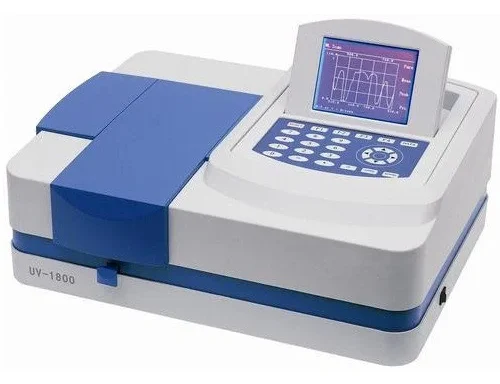
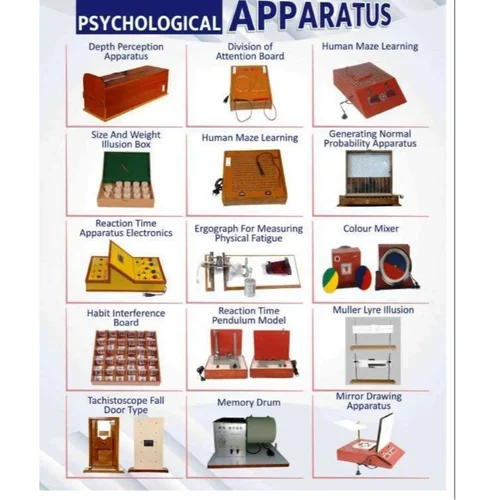
Psychological tests are standardized educational instruments designed to measure and evaluate specific psychological variables such as intelligence, personality traits, emotional functioning, aptitude, behavior patterns, and cognitive abilities, making them an essential component of psychology laboratories and educational assessment environments. Widely used in academic institutions, training centers, and research laboratories, these tests provide a systematic and objective method for understanding individual differences and psychological functioning through carefully structured questions, tasks, or rating scales. Developed using scientific principles of psychometrics, psychological tests ensure reliability, validity, and consistency, allowing students and educators to obtain meaningful and comparable results across different individuals and testing situations. These instruments play a critical role in teaching fundamental concepts of psychological measurement, including standardization, norm referencing, scaling, scoring, and interpretation, thereby strengthening students’ understanding of both theoretical and applied psychology.
Description
Psychological test equipments are essential tools used in educational and laboratory settings to support practical learning in psychology. They help students translate abstract psychological theories into real-world assessment practices. By administering and analyzing these tests, learners gain hands-on experience in evaluating intelligence, personality traits, emotional stability, motivation, and social behavior. Because structured assessment improves understanding, these instruments play a vital role in psychology laboratories and training programs.
Psychological Test Equipments for Learning Assessment Techniques
In psychology laboratories, psychological test equipments allow students to practice standardized testing methods under controlled conditions. These tools include inventories, rating scales, questionnaires, and performance-based tasks that support quantitative data collection. Therefore, students learn how to record responses accurately, calculate scores, and interpret results. This process strengthens skills in data analysis, statistical reasoning, and critical evaluation of human behavior. Consequently, learners build a strong foundation for courses in clinical psychology, counseling psychology, educational psychology, and behavioral sciences.
Standardization, Ethics, and Research Skills Development
Psychological test equipments follow standardized administration and scoring procedures, which ensures consistency and reliability of results. Through laboratory use, students become familiar with ethical principles such as confidentiality, informed consent, and responsible interpretation of findings. In addition, these tests promote awareness of cultural sensitivity and the limitations of psychological measurement tools. Because ethical practice is central to psychology, this exposure prepares students to apply assessment methods thoughtfully and responsibly in professional settings.
Role in Experimental Psychology and Practical Training
Psychological test equipments support experiential learning by enabling supervised practice and controlled experimentation. Students can administer tests, observe behavior, and analyze outcomes within a structured framework. As a result, they develop diagnostic reasoning and a deeper understanding of how psychological variables are measured and operationalized. These instruments also serve as effective demonstration tools during lectures and laboratory sessions. For related educational and laboratory teaching equipment, you may explore:
https://www.aseducationalkits.com/products-category/physics-lab-equipment/
For a broader range of laboratory and educational instruments, professionals can also refer to:
https://interlabs.in/products-catalogue/
Applications
Psychology laboratory practical training
Assessment of intelligence and personality
Emotional and behavioral evaluation studies
Teaching research methods and statistics
Demonstrations in experimental psychology