
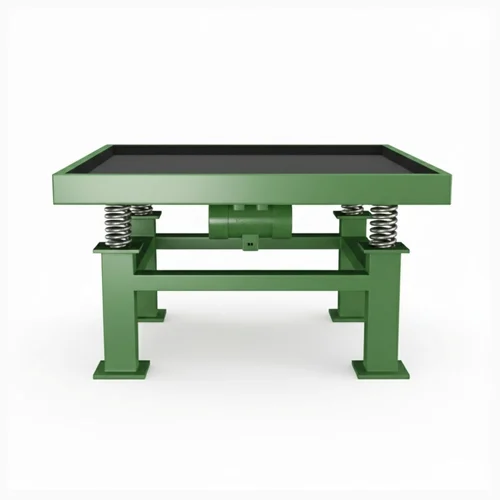
The vibrating table for industrial use is a robust and versatile piece of educational and training equipment designed to demonstrate the principles of vibration, material behavior, and dynamic loading in laboratory and instructional environments. Commonly used in engineering colleges, industrial training institutes, and vocational laboratories, this equipment provides students with hands-on exposure to vibration-based processes that are widely applied in manufacturing, civil engineering, and mechanical systems. The vibrating table allows controlled generation of oscillatory motion, enabling learners to study how different materials, components, and structures respond to vibration under varying conditions. By directly observing vibration effects, students can connect theoretical concepts such as frequency, amplitude, resonance, and damping with real-world industrial applications.
Description
A laboratory vibration table is a robust testing and training device designed to demonstrate vibration principles and material behavior under controlled conditions. It features a heavy-duty frame and a stable platform that support continuous operation and repeated experimental use. Because structural rigidity ensures accurate vibration transfer, the table delivers consistent performance while minimizing noise and energy loss. Moreover, the spacious table surface allows placement of molds, specimens, and experimental assemblies, making it suitable for diverse laboratory demonstrations.
Laboratory Vibration Table for Engineering and Material Testing
In educational and training environments, a laboratory vibration table helps students study vibration mechanics and process optimization. Learners can observe how variations in vibration affect material compaction, settling behavior, and surface finish. Therefore, civil engineering laboratories use it for concrete compaction, aggregate settlement, and mold filling experiments. Mechanical and manufacturing labs also rely on it to analyze component response, fatigue behavior, and dynamic effects under vibration. Consequently, students gain practical exposure to industrial testing methods.
Industrial-Grade Design and Operational Safety
The laboratory vibration table uses a rigid structure that ensures stable operation during experiments. The controlled vibration mechanism reduces unwanted movement and enhances user safety. In addition, the stable base supports secure placement on laboratory floors. Because the design mirrors real industrial equipment, students gain realistic insight into production and testing environments. This helps bridge the gap between theoretical learning and industrial practice.
Educational Value and Skill Development
A laboratory vibration table supports outcome-based education by encouraging hands-on experimentation, observation, and data analysis. Students learn the importance of consistent operating conditions, load distribution, and process control. As a result, they develop a deeper understanding of vibration-related phenomena and industrial system behavior. The table suits both introductory demonstrations and advanced experimental studies. For related laboratory and training equipment, you may explore:
https://www.aseducationalkits.com/products-category/physics-lab-equipment/
For a wider range of laboratory and industrial testing solutions, professionals can also refer to:
https://interlabs.in/products-catalogue/
Applications
Concrete compaction and material settlement studies
Vibration mechanics and dynamic response experiments
Civil engineering and construction material testing
Mechanical and manufacturing laboratory training
Industrial process simulation and demonstrations
See also different:
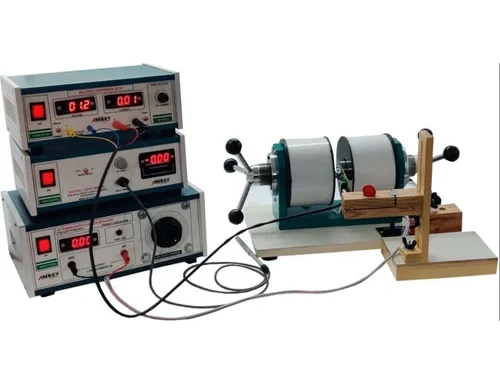
Hall Effect Setup

Orifice And Jet Velocity Apparatus
Orifice Discharge Apparatus
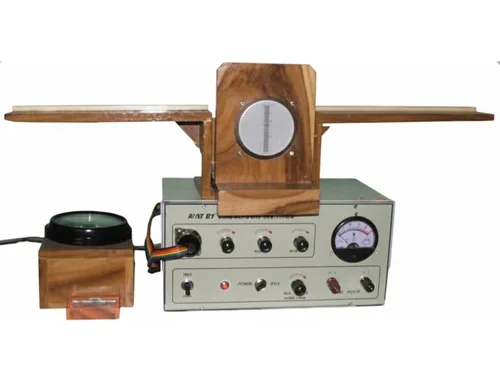
Thomson Method Apparatus