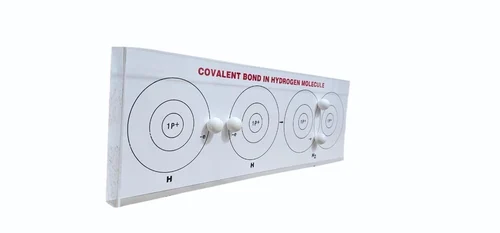

The Phosphorus Laboratory Model is an educational working model designed to visually demonstrate the presence and behavior of phosphorus within a laboratory or classroom setting. Made from high-quality plastic, this compact and lightweight model measures approximately 4 x 5 inches, making it ideal for tabletop demonstrations and easy handling during science lessons or presentations. It features a distinctive red and white color scheme, making the components highly visible and visually engaging for students. This model is specifically developed to support interactive learning in academic environments and is particularly useful for explaining the role of phosphorus in biological and chemical systems.
Description
The Phosphorus Laboratory Model is a practical working model designed to simplify complex scientific concepts related to phosphorus. It serves as an effective teaching aid for chemistry, biology, and environmental science classes. Because phosphorus plays a vital role in living organisms and ecosystems, this model helps students clearly understand its behavior, movement, and biochemical importance.
Educational Applications of the Phosphorus Laboratory Model
The Phosphorus Laboratory Model visually demonstrates topics such as the phosphorus cycle, atomic structure, and nutrient flow in ecosystems. Therefore, students can observe how phosphorus circulates through soil, water, plants, animals, and microorganisms. In addition, teachers use the model to explain phosphorus functions in ATP production, DNA structure, and plant growth.
By transforming theoretical content into a visual and hands-on format, the model enhances student engagement. Consequently, learners develop stronger conceptual clarity and retain information more effectively. It is especially useful for grades 8 to 12, where foundational scientific principles are introduced and explored in detail.
Durable Design and Safe Construction
The Phosphorus Laboratory Model is constructed from high-quality, durable plastic that withstands repeated classroom use. Its material resists wear and tear, which ensures long-term reliability in educational institutions. Moreover, the model is easy to clean and maintain, making it convenient for laboratory environments.
Its compact size allows easy portability and storage, while the bright red and white color scheme improves visibility during demonstrations. As a result, educators can clearly highlight different components and processes during lectures and group discussions.
Importance in STEM and Curriculum-Based Learning
The Phosphorus Laboratory Model complements curriculum-based science kits and laboratory tools. It supports STEM education by encouraging inquiry-based learning and classroom interaction. Furthermore, students can connect the model to real-world applications such as agriculture, environmental management, and human nutrition.
By integrating visual representation with practical explanation, the model promotes active participation and analytical thinking. Consequently, it strengthens both academic understanding and scientific curiosity.
For related laboratory and educational equipment, you may explore:
https://www.aseducationalkits.com/products-category/physics-lab-equipment/
For a broader range of laboratory and analytical solutions, professionals can also refer to:
https://interlabs.in/products-catalogue/