

A laboratory glassware set provides essential tools (beakers, flasks, cylinders, etc.) for mixing, heating, measuring, and storing liquids/solids in science labs, crucial for everything from basic experiments to precise titrations, distillations, and cell culture, using borosilicate glass for thermal/chemical resistance and transparency. Each piece, like burettes for dispensing or Petri dishes for culturing, serves a specific function for accurate and reliable results. Common Glassware & Uses:
Beakers: General containers for holding, mixing, heating, & decanting liquids.
Description
Introduction to Laboratory Glass Ware Set
Laboratory Glass Ware Set is a comprehensive collection of essential glass instruments used in chemistry, biology, and research laboratories. These glassware items support various laboratory procedures such as measuring liquids, mixing chemicals, heating substances, and conducting analytical experiments.
Most laboratory glassware is manufactured from borosilicate glass because it offers excellent thermal resistance and chemical stability. As a result, it can withstand high temperatures and rapid temperature changes without cracking. The transparent structure also allows scientists and students to observe reactions clearly during experiments.
Educational institutions, research laboratories, and industrial testing facilities widely use these glassware sets because they provide accurate measurements and reliable performance for scientific work.
Working Principle of Laboratory Glass Ware Set
The glassware set functions by providing specialized containers and measuring tools for different laboratory processes. Each piece of equipment is designed for a specific task such as measuring volume, transferring liquids, or conducting chemical reactions.
Graduated markings on certain glassware allow accurate volume measurement. Consequently, researchers can prepare solutions with precise concentrations. Heating-compatible glassware can safely hold liquids during thermal experiments.
Because borosilicate glass is chemically inert, it does not react with most laboratory reagents. Therefore, scientists can perform experiments without contamination or unwanted chemical reactions.
Components of Laboratory Glass Ware Set
A typical laboratory glassware set includes a variety of instruments designed for different scientific applications.
Key components include:
- Erlenmeyer Flasks (Conical Flasks) – Used for mixing, swirling liquids without spilling, heating, and storing chemical solutions. The flat base allows direct heating.
- Volumetric Flasks – Designed for preparing solutions with highly precise concentrations.
- Test Tubes – Used for small-scale chemical reactions, sample testing, and observation.
- Graduated Cylinders – Used to measure liquid volumes accurately during experiments.
- Burettes – Used to dispense precise volumes of liquids during titration experiments.
- Pipettes (Graduated or Volumetric) – Used to transfer small, accurate quantities of liquids.
- Funnels – Used for transferring liquids or powders into narrow containers and for filtration processes.
- Condensers – Used to cool vapors back into liquids during distillation and reflux experiments.
- Petri Dishes – Used for culturing microorganisms or for evaporation studies.
- Watch Glasses – Used for covering beakers or performing small-scale evaporation and crystallization.
- Desiccators – Used for removing moisture from samples and storing dry substances.
These instruments work together to support various laboratory experiments and analytical procedures.
Features
Laboratory glassware sets offer several important features that make them suitable for scientific experimentation.
Firstly, borosilicate glass provides excellent chemical inertness. Secondly, the transparent structure allows easy observation of chemical reactions.
Key features include:
- High resistance to heat and thermal shock
- Excellent chemical resistance and durability
- Transparent material for clear observation
- Calibrated markings for precise measurements
- Suitable for heating, mixing, measuring, and storage
These features make the glassware set reliable for laboratory research and education.
Educational Importance
Practical laboratory equipment is essential for science education. Therefore, educational institutions widely use glassware sets to teach students proper experimental techniques.
Students learn how to measure liquids accurately, perform chemical reactions, and handle laboratory equipment safely. Moreover, hands-on laboratory experiments improve understanding of theoretical scientific concepts.
Consequently, glassware sets help students develop essential laboratory skills required for scientific research. Educational institutions can also explore additional science learning kits here:
https://www.aseducationalkits.com/products-category/ncert-educational-kits/
Industrial Uses
Laboratory glassware is widely used in pharmaceutical, chemical, biotechnology, and environmental testing industries. Researchers rely on these tools for chemical analysis, product development, and quality control testing.
Industrial laboratories also use glassware during formulation development and analytical experiments. Training equipment and technical education systems related to skill development can also be explored here:
https://interlabs.in/product-category/training-and-skill-development/
For additional laboratory glassware collections and advanced scientific glass products, refer to:
https://www.iwaki-pyrex.com/products/
Conclusion
Laboratory Glass Ware Set is an essential collection of instruments used for measuring, mixing, heating, and analyzing chemical substances. Its borosilicate glass construction, precision markings, and versatile design make it indispensable for laboratories and educational institutions.
Therefore, it remains a fundamental component of scientific experimentation and laboratory training.
See also different:
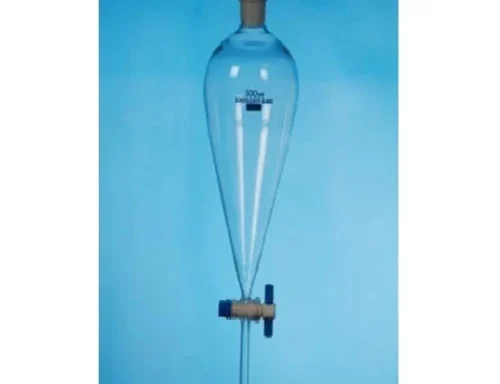
Separating Funnel With Glass Stopcock

Laboratory Conical Flask
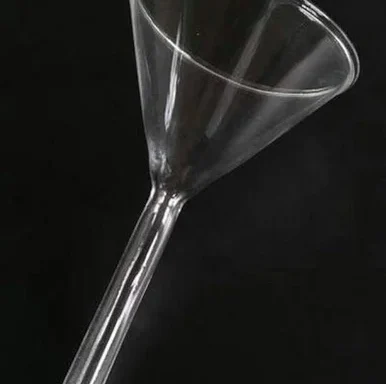
Funnel Borosilicate Glass
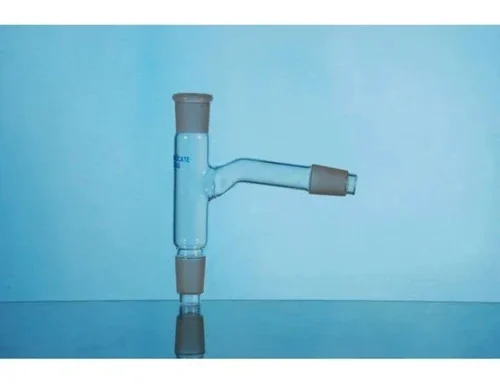
Borosilicate Glass Still Head